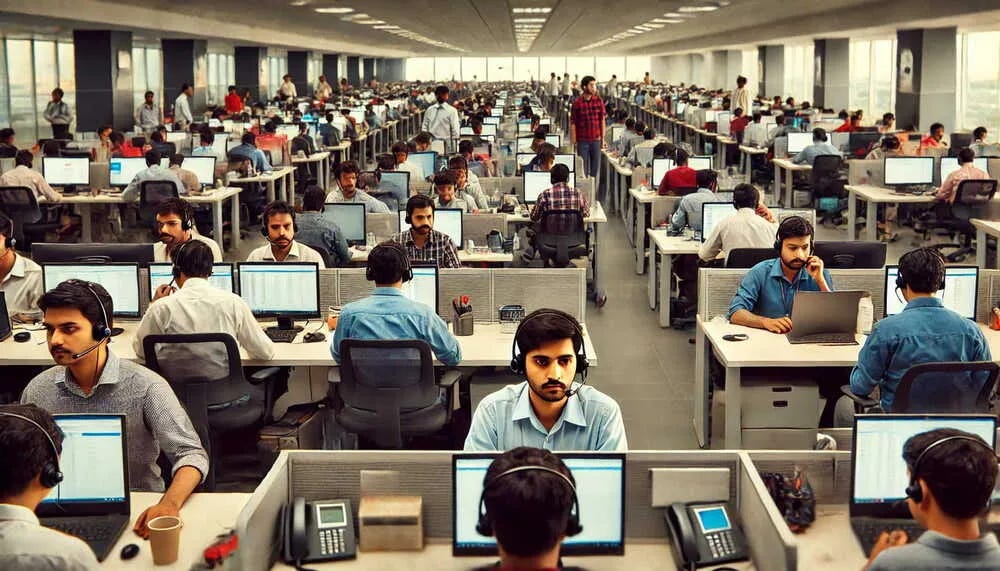


UC Berkeley found that employees who embraced AI tools most enthusiastically did not work less. They worked more.
The research team tracked workers at a 200-person technology firm over eight months, and published their findings in The Harvard Business Review.
The AI tools made more work feel doable. So, workers did more.
They expanded their to-do lists to fill every hour AI freed up, and then kept going. Lunch breaks disappeared. Evenings shortened.
One engineer told researchers: “You had thought that maybe, because you could be more productive with AI, you could save some time and work less.
“You just work the same amount or more.”
An ActivTrak analysis of 10,584 workers measured what actually happened to time allocation after AI adoption. Time spent across every job responsibility rose between 27% and 346%. Focused work sessions fell 9%.
Time spent on email doubled. Researchers at Boston Consulting Group named the resulting condition “AI Brain Fry.” Companies are seeing a pattern of cognitive overload in workers who must supervise multiple AI systems simultaneously. About one in seven workers surveyed reported mental fatigue from juggling AI tools. The workers most affected are the early adopters, the employees companies most want to retain.
The UC Berkeley researchers identified that AI expands a worker’s sphere of accountability. It allows one person to take on tasks that previously required three. Organizations register the output gain and quietly raise their expectations for what a single employee can produce.
BUY NOW! Get the NEW Book that exposes the Narratives Tech uses to build its AI Empire. $4.95 flat fee for Kindle, Nook, Tablets, and Mobile. No subscription required.3.5-hr reading time.

The worker does not receive a reduced workload. The worker receives a larger one, denominated in fewer hours, with no additional compensation and no reduction in the performance bar.
That is a productivity gain for the company and a sustained increase in cognitive load for the individual. It tends to produce, over time, the conditions that precede burnout.
Nevertheless, companies are making workforce decisions based on the assumption that AI-enabled employees will be more productive and that fewer employees will therefore be needed.
A Gartner survey of 350 global business executives, though, found that 80% of those companies reported workforce reductions after adopting AI or autonomous technology. All at companies with annual revenues of at least $1 billion.
Workforce reduction rates were nearly identical among companies that reported high ROI from AI and companies that reported marginal gains or negative outcomes from AI-use. Cutting workers and keeping AI returns did not correlate.
Companies that showed the strongest AI returns were those that used the technology to amplify their existing workforce rather than shrink it.
Gartner’s lead analyst, Helen Poitevin, stated the conclusion directly: “Workforce reductions may create budget room, but they do not create return.”
Organizations that improved ROI were those that invested aggressively in skills, roles, and operating models that allow workers to guide and scale AI systems — that is, they invested in organizational change management.
The companies cutting their way to AI returns are, by Gartner’s data, pursuing a strategy with a poor track record.
The Wall Street Journal framed the same tension as a stark CEO choice: lay off workers or make them do more. Most companies have chosen the former.
The Gartner data suggests that choice is producing short-term budget relief and limited long-term value. The companies choosing to make workers do more are generating the returns. Those companies are pursuing a so-called “Human Amplification” model.
BUY NOW! Get the book that examines how the AI invasion already happened. You just weren’t invited. $9.95 flat fee for Kindle, Nook, Tablets, and Mobile. No subscription required. 2-hr reading time.
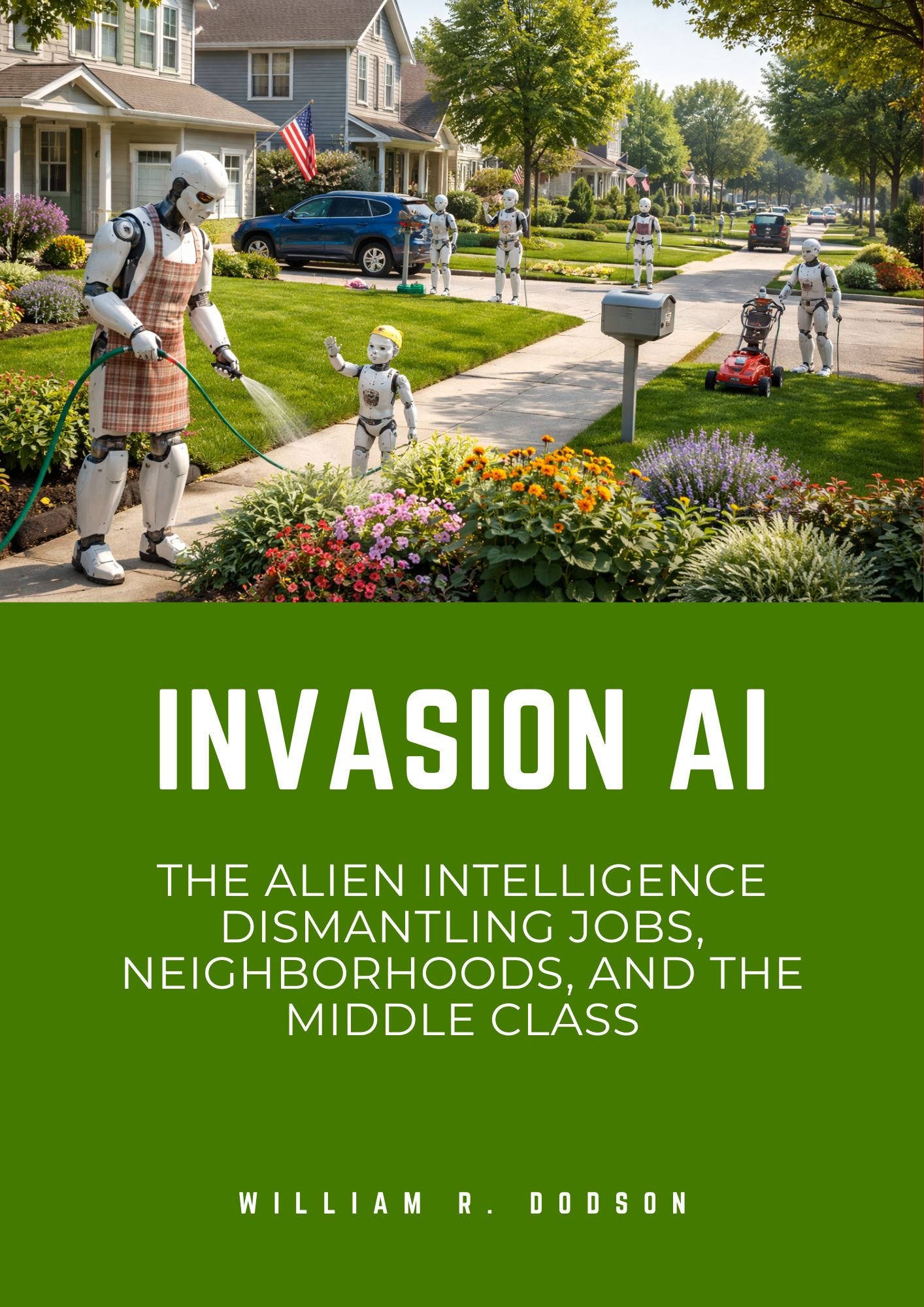
The companies choosing layoffs are generating headlines.
The human cost of the amplification model is visible in the burnout data above.
The human cost of the layoff model is visible in labor market data emerging from South Korea. The consequences of AI-driven displacement are measurable in South Korean business in a way that U.S. aggregate statistics have so far obscured.
Employment in professional services like law, accounting, management consulting, fell 8.8% over the same period. Of the 1,200 people who passed South Korea’s CPA exam last year, only 338 had secured jobs as of October.
That is a passage rate for a demanding professional qualification translating into a 28% employment rate for newly credentialed accountants. The shortfall is attributed partly to the rapid adoption of AI tools by accounting firms that now require fewer junior staff to process the same volume of work.
South Korea’s data is a leading indicator, not an outlier.
The country has one of the highest robotics densities in the world and an early-adopting professional services sector. What is visible there in employment statistics is likely forming in U.S. and European labor markets in ways that headline unemployment rates do not yet capture.
The Gartner finding and the Korean data point in the same direction: AI layoffs are producing budget room. However, they are not producing returns.
The workers left behind through layoffs, and those retained, are bearing human costs that company balance sheets do not record.