


A class-action lawsuit filed January 20 in California names Eightfold AI as a defendant and alleges that the company scraped social media profiles, location data, internet activity, and tracking data on over one billion workers without their knowledge.
Listen on Apple Podcasts
Eightfold’s AI then generated “Match Scores” that ranked applicants from zero to five. Lower-ranked candidates were filtered out before any human being ever reviewed their application.
The platform is used by Microsoft, PayPal, Morgan Stanley, Salesforce, Starbucks, Chevron, and Bayer. The named plaintiffs, Erin Kistler and Sruti Bhaumik, are both California residents with STEM backgrounds and more than a decade of experience. Neither was ever interviewed.
The lawsuit was brought by former Equal Employment Opportunity Commission (EEOC) chair Jenny R. Yang and the nonprofit Towards Justice.
The lawsuit does not claim the algorithm was biased. It claims instead the algorithm operated in secret. That distinction matters more than it might appear.
Previous AI hiring lawsuits have argued that the algorithm produced discriminatory outcomes. The Eightfold case argues that workers have a right to know an algorithm evaluated them at all — the same transparency right that governs credit scoring under the Fair Credit Reporting Act.
If the court accepts that logic, every AI-gated hiring process in the country faces disclosure requirements. The case does not need to win to change industry practice. It needs only to survive long enough to reach discovery.
BUY NOW! Get the NEW Book that exposes the Narratives Tech uses to build its AI Empire. $4.95 flat fee for Kindle, Nook, Tablets, and Mobile. No subscription required.3.5-hr reading time.

The Eightfold lawsuit is not alone. The Mobley v. Workday case, proceeding in California federal court, alleges discrimination through an AI-powered hiring system and is expected to produce the first major ruling on AI hiring vendor liability in 2026.
The EEOC filed its own AI hiring discrimination case in January 2025. A Missouri state case against Starbucks over AI-assisted hiring decisions is also pending. Multiple litigation tracks are converging simultaneously, and they are converging around a single underlying question: when an algorithm decides your application never reaches a human, who is accountable for that decision?
The legal context gives IBM’s announcement this week a significance that the company’s press coverage has mostly missed. IBM announced plans to triple its U.S. entry-level hiring in 2026. The company described the move as a direct response to the AI transition rather than a reversal of it.
IBM’s Chief Human Resources Officer (CHRO) Nickle LaMoreaux said at Charter’s “Leading With AI Summit:” “We are tripling our entry-level hiring, and yes, that is for software developers and all these jobs we’re being told AI can do.”
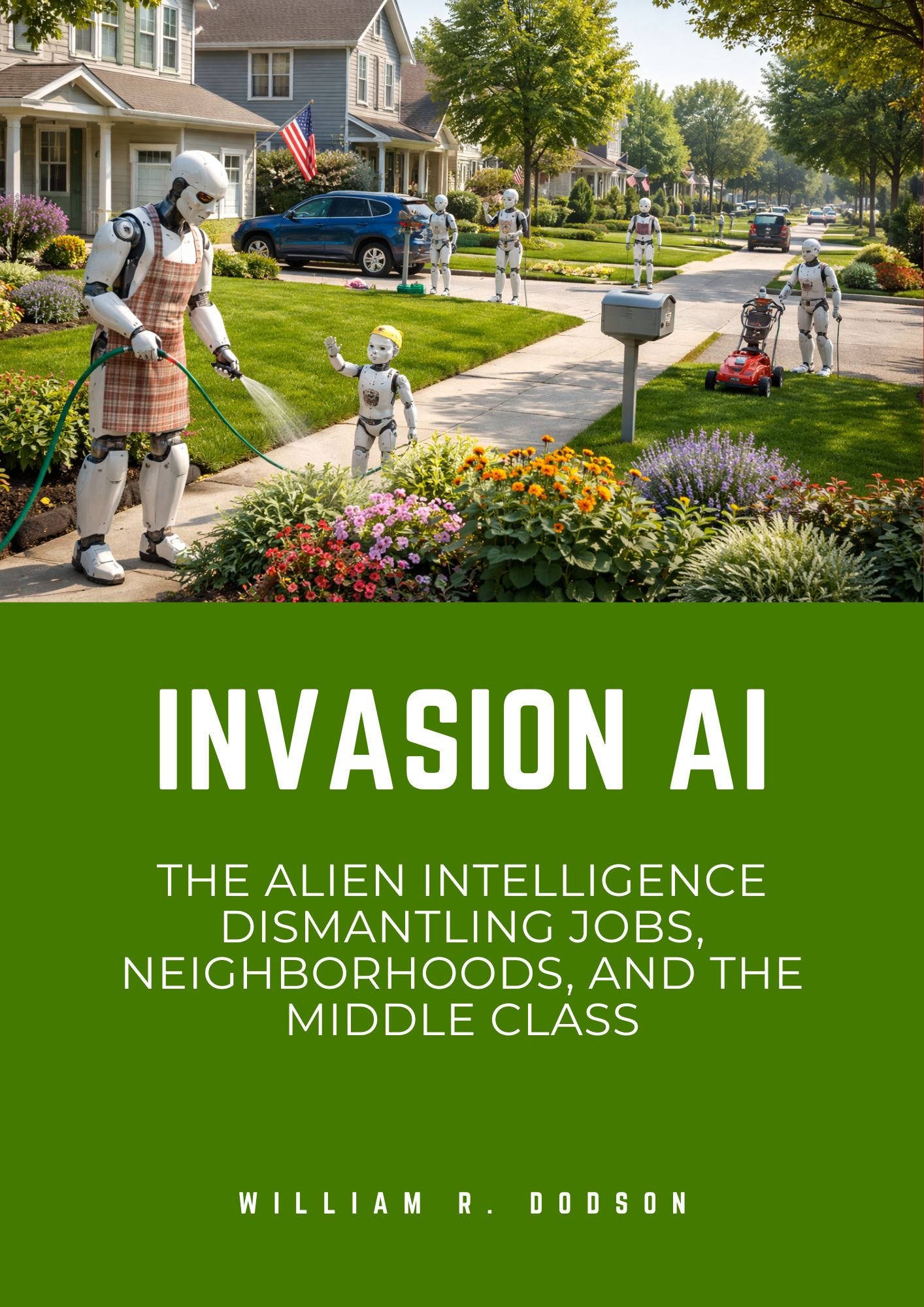
BUY NOW! Get the book that examines how the AI invasion already happened. You just weren’t invited. $9.95 flat fee for Kindle, Nook, Tablets, and Mobile. No subscription required. 2-hr reading time.
She added that entry-level jobs from two to three years ago can now largely be performed by AI. She insisted that companies must rewrite every entry-level role to reflect what human workers are actually better at. At IBM, that means junior developers now spend less time on routine coding and more time in direct client engagement and product development.
IBM’s reasoning is partly strategic pipeline management. Cutting entry-level hiring today creates a future shortage of mid-level managers. Poaching experienced workers from competitors costs more and integrates more slowly. Younger workers who enter the workforce during an AI transition tend to be more AI-fluent than mid-career workers who built their skills before the tools existed.
IBM is betting on building internally rather than buying externally. Dropbox has announced a 25% expansion of its internship and graduate programs on the same logic.
So IBM has already confirmed that its HR department shifted from 700 staff to 50 using AI. The 650 displaced workers were described as “freed up” for higher-value work. Actually, the 50 who remained are a different, more specialized population than the 700 who preceded them.
IBM’s new entry-level hires will step into roles that have been rewritten around AI oversight and customer interaction. Those roles are not the roles that existed before. They pay differently, require different skills, and serve a different organizational function. AI makers are marketing to a different tune in light of the revelation (to them).
The Fortune Workplace Innovation Summit opens in Atlanta next week. Anthropic’s CHRO and the CEO of AI workplace platform Glean are scheduled to present AI agents as teammates rather than replacements.
Of course, the final decision as to how to deploy AI lays with corporate executives under pressure from shareholders. Which path do you think they’ll choose: pro-worker or replace-worker?


